Hardwood Flooring: Types, Installation & Costs
Discover everything about hardwood flooring from selection to installation. Compare solid vs engineered options and find licensed contractors in your area.
Why Choose Hardwood Flooring?
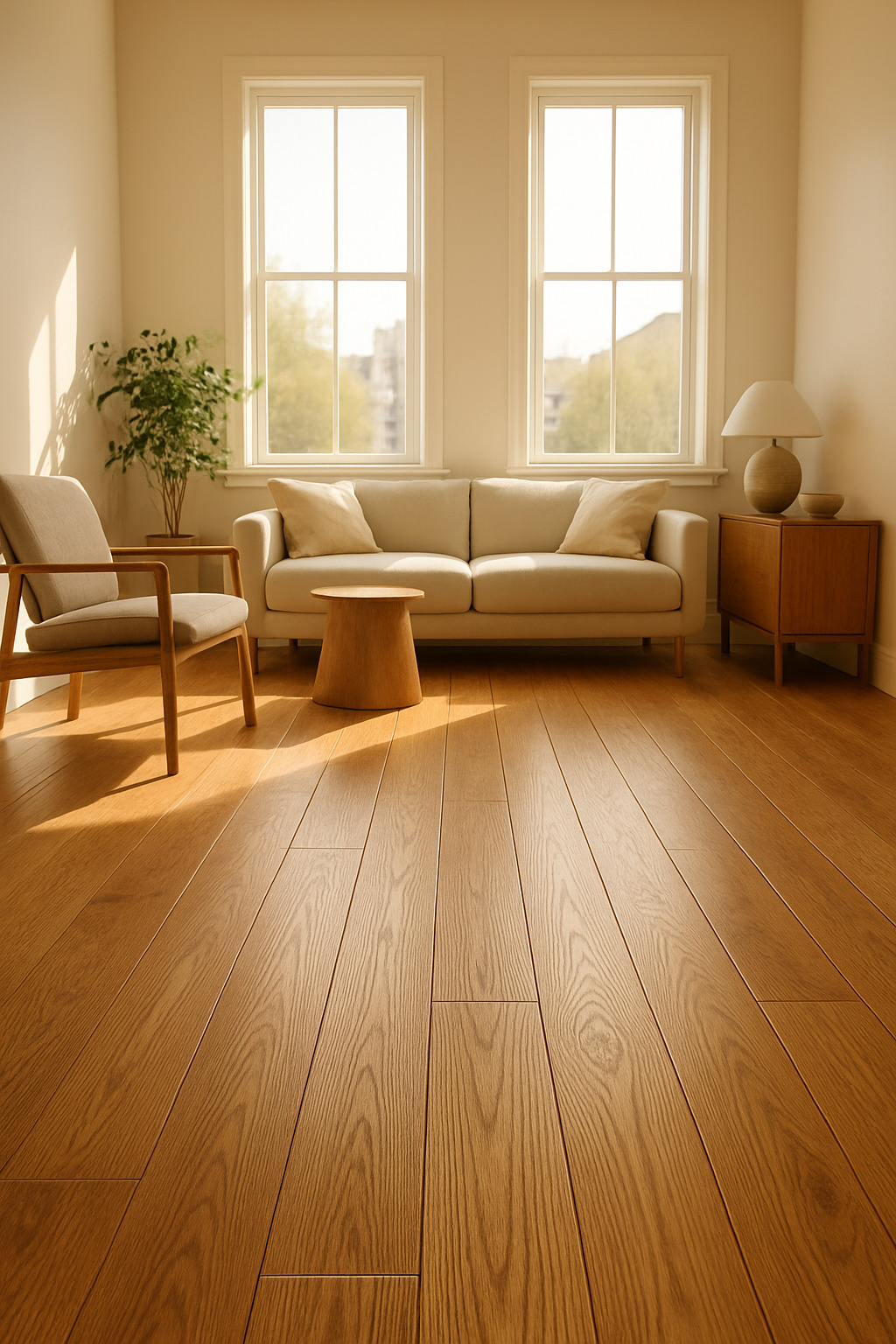
Hardwood flooring remains the gold standard for home flooring, offering timeless beauty, exceptional durability, and increased home value. With proper care, hardwood floors can last generations while providing warmth and elegance to any space. Whether you prefer traditional solid hardwood or modern engineered options, professional installation ensures your investment delivers decades of beauty and performance.
Types of Hardwood Flooring
Solid Hardwood Flooring
Solid hardwood consists of single wood planks, typically 3/4 inch thick. It's the traditional choice offering maximum longevity and can be refinished multiple times. Best for main floors and areas with controlled humidity. Popular species include:
- Red Oak - Classic grain pattern, excellent durability (1290 Janka rating)
- White Oak - Water-resistant, contemporary look (1360 Janka rating)
- Maple - Light color, minimal grain, very hard (1450 Janka rating)
- Cherry - Rich color that deepens with age (950 Janka rating)
- Walnut - Luxurious dark wood with distinctive grain (1010 Janka rating)
Engineered Hardwood Flooring
Engineered hardwood features a real wood veneer over multiple plywood layers. This construction provides superior dimensional stability and moisture resistance. Benefits include:
- Installation on any level including basements
- Better resistance to humidity and temperature changes
- Compatible with radiant heating systems
- Wider plank options without cupping concerns
- Often more affordable than solid hardwood
Prefinished vs Unfinished
Prefinished hardwood arrives ready to install with factory-applied stain and finish. It offers immediate use, consistent finish quality, and no on-site fumes. Unfinished hardwood is sanded and finished after installation, allowing custom stain colors and seamless appearance but requiring more installation time.
Professional Hardwood Installation Process
Quality hardwood flooring installation requires expertise and precision. Here's what to expect from professional contractors:
1. Pre-Installation Assessment
- Subfloor inspection and moisture testing
- Room measurement and material calculation
- Acclimation period planning (48-72 hours)
- Removal of existing flooring if needed
2. Subfloor Preparation
- Level uneven areas (within 3/16" over 10 feet)
- Install moisture barriers if required
- Secure any squeaky subfloor sections
- Clean thoroughly for optimal adhesion
3. Installation Methods
- Nail-Down - Traditional method for solid hardwood over wood subfloors
- Glue-Down - Common for engineered hardwood over concrete
- Floating - Click-lock engineered planks over various subfloors
- Staple-Down - Alternative to nailing for thinner hardwood
4. Finishing Touches
- Install transitions and baseboards
- Apply finish coats (for unfinished hardwood)
- Final inspection and quality check
- Care instructions and warranty information
Hardwood Flooring Cost Breakdown
Understanding hardwood flooring costs helps you budget effectively for your project. Here's what influences pricing:
Material Costs by Type
- Solid Oak - $3-8 per sq ft
- Solid Maple - $4-10 per sq ft
- Solid Cherry - $5-10 per sq ft
- Engineered Hardwood - $3-14 per sq ft
- Exotic Species - $8-18 per sq ft
Installation Costs
- Basic installation - $3-5 per sq ft
- Complex patterns - $5-8 per sq ft
- Stairs - $75-150 per step
- Removal of old flooring - $1-3 per sq ft
- Subfloor repairs - $2-5 per sq ft
Additional Expenses
- Moisture barriers - $0.50-1 per sq ft
- Transitions and moldings - $5-12 per linear foot
- Furniture moving - $50-200
- Custom staining - $1-2 per sq ft
Hardwood Floor Maintenance & Care
Proper maintenance preserves your hardwood flooring's beauty and extends its lifespan. Follow these professional guidelines:
Daily & Weekly Care
- Sweep or vacuum daily to prevent scratches from dirt and debris
- Use microfiber mops with hardwood-specific cleaners weekly
- Wipe spills immediately to prevent water damage
- Place mats at entrances to reduce tracked-in dirt
Preventive Measures
- Maintain 30-50% humidity levels year-round
- Use furniture pads to prevent scratches and dents
- Avoid wearing high heels or cleats on hardwood
- Protect from direct sunlight to prevent fading
- Trim pet nails regularly to avoid scratches
Professional Maintenance
- Deep cleaning - Annually with professional products
- Recoating - Every 3-5 years to refresh finish
- Refinishing - Every 10-15 years for solid hardwood
- Board replacement - As needed for damaged sections
Benefits of Professional Hardwood Installation
While DIY installation might seem appealing, professional hardwood flooring contractors deliver superior results:
- Expertise - Knowledge of wood behavior and installation techniques
- Proper tools - Professional-grade equipment for precise cuts and fitting
- Warranty protection - Manufacturer warranties often require professional installation
- Time savings - Complete installation in days vs weeks for DIY
- Problem solving - Handle subfloor issues and unexpected challenges
- Perfect finish - Seamless transitions and professional-quality results
Frequently Asked Questions About Hardwood Flooring
Frequently Asked Questions
Ready to Install Hardwood Flooring?
Connect with licensed hardwood flooring contractors in your area. Get free quotes, compare options, and find the perfect professional for your project.